
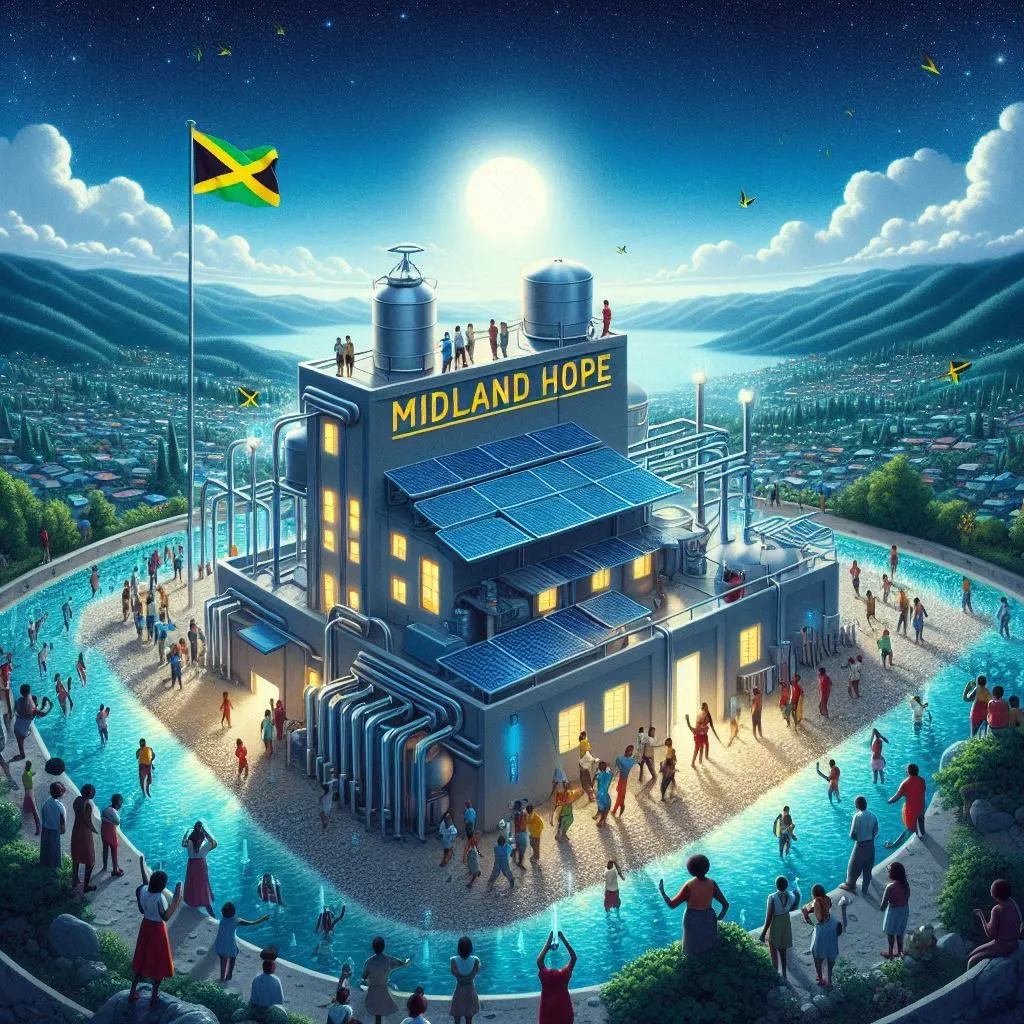
Support for jamaica
Emergency Water Relief Program
Delivering Immediate Relief, Stabilization, and Recovery Across Jamaica
Emergency Relief & Food Assistance Programme
Delivering Immediate Relief, Stabilization, and Recovery Across Jamaica
Our Mission
Our emergency relief teams mobilize within hours to distribute food parcels, bottled water, and essential supplies to families affected by disaster. Following the catastrophic Category 5 Hurricane Melissa, we are committed to providing life-saving aid, stabilizing vulnerable communities, and supporting long-term recovery across Jamaica.
1. Situation Overview
Jamaica is currently facing one of the most severe humanitarian crises in its modern history. The Category 5 hurricane caused massive destruction across several parishes, leaving thousands displaced and essential infrastructure severely damaged.
Widespread Destruction
- Major structural collapse of homes, schools, hospitals, and businesses.
- Entire communities left uninhabitable in St Elizabeth, Westmoreland, St James, Hanover, Trelawny, St Ann, Portland, St. Mary, Negril, St. Thomas, and Clarendon.
- Roads blocked by debris, fallen trees, and landslides.
Severe Flooding & Landslides
- Flash flooding and mudslides destroyed agricultural lands and livestock.
- Rural communities face heightened food insecurity.
Mass Displacement
- Thousands forced into shelters or living outdoors.
- Limited access to electricity, clean water, and sanitation.
Disrupted Communication & Transportation
- Downed communication networks have isolated some parishes.
- Emergency teams face challenges reaching cut-off communities.
Escalating Health Risks
- Higher risk of waterborne illnesses due to contaminated floodwater.
- Expected spike in mosquito-borne diseases such as dengue fever.
- Increased dehydration risk among elderly and infants.
2. Food Assistance Programme
Access to food is a human right — not a privilege. Our Food Assistance Programme ensures households receive immediate relief and continued nutritional support during and after the crisis.
Emergency Food Relief
- Ready-to-eat meals for displaced families.
- Food parcels including rice, beans, canned protein, infant food, and cooking supplies.
- Bottled drinking water and electrolyte solutions.
- Specialized nutrition packages for seniors and medically vulnerable individuals.
Priority Groups
- Single-parent families
- Elderly individuals living alone
- Persons with disabilities
- Rural and isolated communities
- Families facing chronic poverty
Rapid Deployment
- Teams deploy using trucks, small boats, and foot patrol to reach blocked areas.
- Coordination with local volunteers ensures fast and safe distribution.
- Continuous restocking through partnerships with farmers and wholesalers.
Stabilization & Recovery
- Support for re-establishing local food markets and supply chains.
- Assistance to farmers with seeds, tools, and recovery resources.
- Community kitchens in shelters and high-need areas.
- Ongoing nutritional support for vulnerable households.
3. Our Commitment
We stand with every family affected by this disaster. Our commitment is to protect the vulnerable, restore dignity, and rebuild hope by ensuring timely access to food, water, and essential care. Every donation directly supports recovery and helps families rebuild their lives.
DRINKING WATER RECOVERY & RESILIENCE PROGRAM
Common water tank sizes in Jamaica range from 200 gallons for household use to 1,500 gallons or more for larger homes and businesses.
A 650-gallon tank is another popular size, often used for residential needs, and a 1,000-gallon tank is a common choice for medium-sized storage.
Key notes
- The number of 1,500-gallon water tanks that can fit within a 5,000 square foot area (which is part of a 2-acre plot) depends on the specific dimensions of the tanks, but generally, a significant number of tanks would fit. The total area of 2 acres (approximately 87,120 square feet) offers ample space.
- Tank Dimensions and Footprint
- Common 1,500-gallon tanks are available in various shapes (vertical, horizontal, or low-profile).
- Vertical Cylindrical Tanks: A common size is approximately 93 inches in diameter and 63 inches in height.
- Diameter in feet: 93 inches / 12 inches/foot = 7.75 feet.
- Footprint (Area):
- π×(radius)2 ≈ 3.14 × (3.875 ft) 2 ≈ 47.15 pi cross open paren radius close paren squared is approximately equal to 3.14 cross open paren 3.875 ft close paren squared is approximately equal to 47.15 square feet.
- Low-Profile Septic/Water Tanks: A common size is approximately 157 inches long by 69 inches wide.
- Footprint (Area):
- (157 in/12 in/ft) × (69 in/12 in/ft) ≈ 13.08 ft × 5.75 ft ≈ 75.21
open paren 157 in / 12 in/ft close paren cross open paren 69 in / 12 in/ft close paren is approximately equal to 13.08 ft cross 5.75 ft is approximately equal to 75.21 square feet.
- Calculation of Tanks per 5,000 sq. ft.
- For calculation purposes, we will use the required footprint of the tanks within the 5,000 square feet available area.
- Using Vertical Tanks (approx. 47.15 sq. ft. each):
- 5000 sq. ft./47.15 sq. ft./tank ≈ 106
5000 sq. ft. / 47.15 sq. ft./tank is approximately equal to 106
5000 sq. ft. /47.15 sq. ft./tank ≈ 106 tanks.
- 5000 sq. ft./47.15 sq. ft./tank ≈ 106
- Using Low-Profile Tanks (approx. 75.21 sq. ft. each):
- 5000 sq. ft./75.21sq. ft./tank ≈ 66
- 5000 sq. ft. / 75.21 sq. ft./tank is approximately equal to 66 tanks.
- Practical Considerations
- In a practical application, you would need to account for spacing between tanks for access, maintenance, and safety regulations (e.g., in Jamaica). This means the actual number of tanks would be lower than the theoretical maximum. The 2 acres of land provide more than enough total space to position these tanks with adequate spacing if needed.
- The final number of tanks depends heavily on:
- The exact dimensions of the “common” tanks available in Jamaica.
- The chosen layout (e.g., organized rows, a single cluster).
- Local building codes and regulations in Jamaica regarding water storage and tank installation.
- The need for concrete pads or other ground preparation for installation.
Estimated Prices for Empty Water Bottles in Jamaica (2024/2025)
Locally Sourced (from Jamaican Suppliers)
| Bottle Size | Type | Unit Price (JMD) | Wholesale Bulk (per 1,000) | Notes |
| 500ml | PET Plastic | $12–$20 | $12,000–$18,000 | Most common for retail |
| 1L | PET Plastic | $20–$30 | $20,000–$28,000 | Great for general use |
| 5L | HDPE Plastic | $90–$120 | $90,000–$115,000 | Often for home delivery |
| Bottle Caps | Tamper-evident | $1–$3 | $1,000–$3,000 per 1,000 caps | Sold separately or combo |
Top local suppliers include:
- Wisynco Group (may offer preforms if you blow your own bottles)
- Jamaica Packaging Industries
- Caribbean Packaging Industries
- Plastico Industries
Imported (China / USA / Trinidad)
Often cheaper in bulk, but consider shipping, customs, and delays.
| Source | Estimated Price per 1,000 Bottles | Freight & Duties |
| China (Alibaba) | USD $40–$60 per 1,000 (500ml) | 30–45% added landed cost |
| USA | USD $80–$120 per 1,000 (500ml) | Quicker, higher cost |
| Trinidad | JMD $14–$18 per bottle (500ml) | Lower duty under CSME |
Additional Costs to Plan For
| Item | Estimated Cost |
| Labels & Design | JMD $5–$10 per bottle (or less) |
| Shrink Wrapping / Packaging | JMD $2–$5 per unit |
| Bottle Filling Line | USD $3,000–$10,000 (starter line) or outsource to co-packer |
Example: Monthly Cost for 10,000 Bottles (500ml)
| Item | Unit Cost (JMD) | Total (JMD) |
| 500ml Bottle | $15 | $150,000 |
| Caps | $2 | $20,000 |
| Labels | $7 | $70,000 |
| Estimated Total | $240,000 |
Tips for Saving Costs:
- Buy preforms + bottle-blowing machine (more upfront, lower long-term cost).
- Partner with co-packers if you’re not ready to buy machinery.
- Negotiate contracts with local suppliers for discounts on volume.