
What is PCI DSS compliance?
PCI DSS compliance refers to the Payment Card Industry Data Security Standard, which is a set of security standards designed to ensure that all companies that accept, process, store or transmit credit card information maintain a secure environment. It aims to protect cardholder data from theft and fraud, ensuring secure transactions across the payment ecosystem.
How does MHI ensure data security?
MHI ensures data security through multiple layers of protection, including AES-256 encryption for cardholder data, TLS 1.3 for data in transit, and robust network security measures such as firewalls and intrusion detection systems. Additionally, role-based access control and multi-factor authentication are implemented to safeguard sensitive information.
What are the benefits of cross-border payments?
Cross-border payments facilitate international trade and commerce by allowing businesses to transact seamlessly across borders. They enable faster and more efficient transactions, reduce currency conversion costs, and provide access to new markets. MHI’s platform enhances these benefits by ensuring compliance and security in every transaction, fostering trust between parties.
How does MHI handle transaction monitoring?
MHI employs advanced AI-based anomaly detection systems to monitor transactions in real-time. This proactive approach helps identify and flag suspicious activities, ensuring compliance with AML and KYC regulations. Regular audits and reporting further enhance the integrity of the transaction monitoring process, maintaining a secure environment for all users.
What is the role of compliance in MHI’s operations?
Compliance plays a crucial role in MHI’s operations by ensuring adherence to regulatory standards such as PCI DSS, AML, and KYC. This commitment to compliance not only protects customer data but also builds trust with partners and clients. MHI’s robust compliance framework is designed to mitigate risks and enhance the overall security of its payment processing services.
What future developments can we expect from MHI?
MHI plans to introduce several future developments, including the launch of domestic processing in Canada by Q4 2025, cross-border integration with Jamaica by Q1 2026, and the introduction of digital wallet solutions for SMEs by Q3 2026. These initiatives aim to enhance financial inclusion and streamline digital transactions across borders.
Compliance & Ethics Policy
Midland Hope International is a registered non-profit organization committed to upholding the highest standards of integrity, transparency, and accountability in all our operations. Our mission to support humanitarian aid and community development is guided by principles of fairness, lawful conduct, and ethical stewardship of resources.
1. Legal Compliance
Midland Hope International adheres to all applicable Canadian federal and provincial laws governing not-for-profit organizations, including the Ontario Not-for-Profit Corporations Act (ONCA) and the Income Tax Act of Canada. We maintain accurate records, report activities truthfully, and ensure that all operations are consistent with our stated charitable objectives.
2. Anti-Money Laundering (AML) & Financial Integrity
We take every precaution to prevent misuse of our financial systems. All donations and disbursements are subject to internal review to ensure that funds are used solely for their intended charitable purposes. Midland Hope International complies with Canada’s Proceeds of Crime (Money Laundering) and Terrorist Financing Act (PCMLTFA) and works only with verified financial institutions and partners.
3. Governance & Accountability
Our Board of Directors oversees the management and allocation of all resources. Every major financial transaction is reviewed and approved by authorized officers, ensuring responsible stewardship of donor funds. Annual reports and financial statements are made available upon request to demonstrate full transparency.

4. Data Protection & Privacy
We respect and protect the privacy of all individuals and organizations we interact with. Personal and financial information is stored securely and used only for purposes directly related to our operations, in compliance with the Personal Information Protection and Electronic Documents Act (PIPEDA).
5. Ethical Conduct
All directors, staff, and volunteers are required to act with honesty, respect, and fairness in every engagement. Conflicts of interest are declared and managed appropriately. We do not engage in or tolerate any form of discrimination, corruption, or exploitation.
6. International Cooperation
When operating or disbursing funds internationally, Midland Hope International follows Canadian government guidelines and international humanitarian principles, ensuring all aid complies with both domestic and recipient-country regulations.
7. Reporting & Whistleblower Protection
We encourage transparency and accountability at all levels. Any individual may confidentially report suspected violations of this policy through our internal reporting system. Reports are investigated promptly and fairly, with strict protection against retaliation.
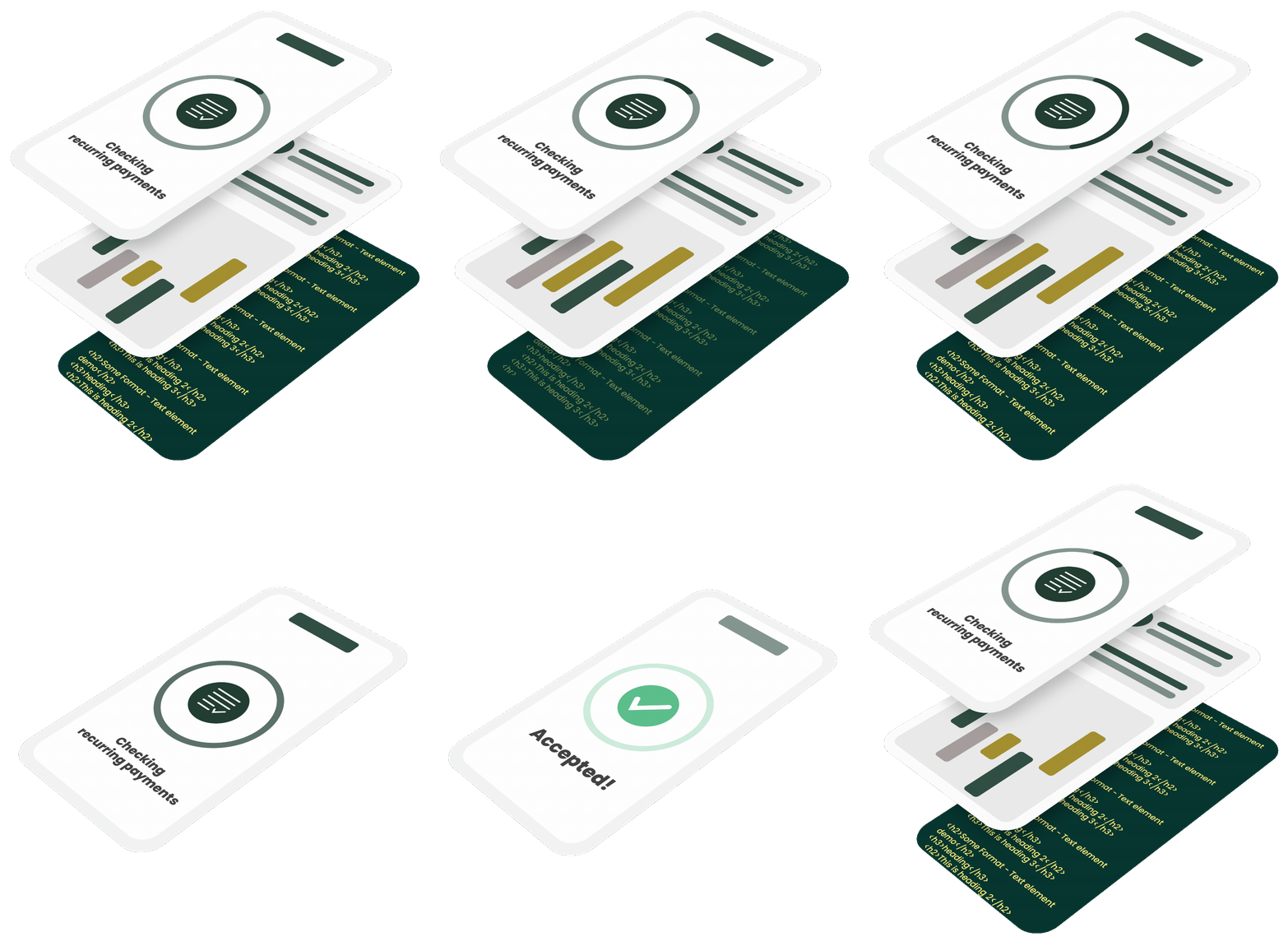
PCI DSS COMPLIANCE
01
Initiation
Customer starts the payment process.
The payment process begins when a customer initiates a transaction through an integrated portal or API, capturing transaction data securely using tokenization.
02
Review
Data is securely transmitted for approval.
In this step, the transaction data is encrypted and sent through MHI’s secure payment gateway to the acquiring bank, ensuring that sensitive information is protected during the authorization process.
03
Settlement
Funds are held in the merchant account.
After authorization, funds are temporarily held in MHI’s merchant account for processing.
04
Notification
Both payer and merchant receive encrypted receipts, ensuring transparency and security in transactions.